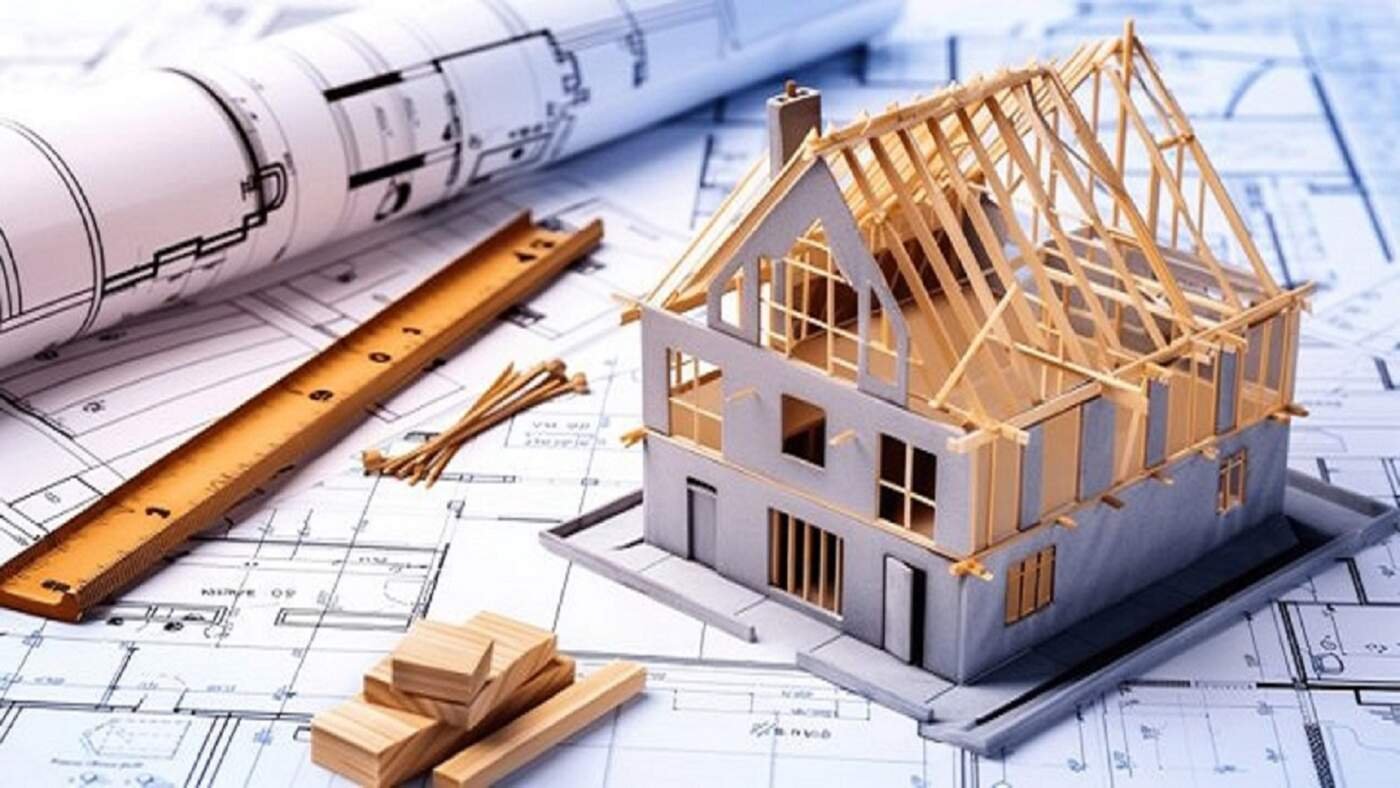

Yes, the interest you pay on a loan for an under-construction property is claimable as a tax deduction, but only after the construction has been completed and the property is handed over to you. Usually, U.S. tax laws allow one to deduct mortgage interest on their primary residence or certain second homes; however, the time, property classification, and documentation play a vital role here. Before the home is built, the interest paid on the home loan is considered as pre-construction interest, and this amount may be deductible only after the home is made for occupation.
Financing, planning, and budgeting are difficult for most homebuyers. That’s why some people rely on outsourcing construction estimating services so they can better forecast costs, plan the cash flow, and use their loan repayment strategy as well as the tax benefits to their advantage.
What Is Pre-Construction Interest?
Pre-construction interest is a part of loan interest that you pay only when your property is in the process of being constructed and is not yet a habitable space. In the U.S., this interest is not claimable right away; however, once the property is completed and certified as a residence, these payments may be combined with the deductible mortgage interest over time.
Eligibility to Claim Interest on Under-Construction Property
If you want to get mortgage interest deductions for an under-construction home, you need to follow the steps below to make sure you are eligible :
- The property should have been financed by a mortgage or a bank loan for construction, etc., i.e., a loan from a recognized lender.
- The property should be in your name (or in the name of your co-owner).
- The property must be completed and be ready for the owner to reside.
- Only when the house is delivered will the interest payments before completion be allowed to be claimed.
U.S. Tax Rules on Pre-Construction Interest
The IRS has no separate “pre-construction” provision as India’s Section 24(b), but the logic that applies there is the same:
- By the standards set forth in IRS Publication 936, interest on a mortgage for a qualified residence (primary or certain secondary homes) is only allowed as a deduction if the home is completed.
- According to the IRS, for houses under construction, you are permitted to treat the house as a qualified residence for up to 24 months before it is ready, on condition that you move in after it’s done.
- Consequently, the mortgage interest during the building phase is the one you are allowed to deduct if the house is occupied within such a period.
Example: Claiming Pre-Construction Interest
| Particulars | Amount Paid | Treatment |
| Pre-construction interest (3 years) | $60,000 | Deductible once the property is a qualified residence, spread over eligible years |
| Annual post-construction interest | $15,000 | Deductible subject to IRS mortgage interest rules |
| Total annual deduction (after possession) | $15,000 + eligible portion of pre-construction interest | Limited to IRS mortgage interest deduction caps |
Note: By 2025, TCJA sets a limit on the mortgage interest deduction for loans not exceeding $750,000 (for mortgages started after Dec 15, 2017).
Maximum Deduction Limits
- Primary residence or second home: The mortgage interest can be deducted for loans up to $750,000 ($1 million for older loans).
- Rental property: The interest might be a rental expense, thus deductible, if the property is rented out after being finished.
- Construction period: The deduction is available for no more than 24 months of construction if the home is for your occupation after the finishing process.
Interest Benefits for Under-Construction Property
- Tax Savings – By combining pre-construction interest with your property, you decrease taxable income when the property qualifies as a residence.
- Better Loan Management – The fact that you can deduct the interest gives you a nice feeling that you will offset the borrowing costs.
- Investment Advantage – If you rent the property after its completion, you are allowed to deduct the full interest as a rental expense.
- Joint Ownership Benefit – Two partners co-owning can both firmly take tax deductions that are proportional to their share, thereby doubling the tax advantage.
- Capital Gains Offset – In case you sell it before possession, the money you spent on the interest can be added to your property’s cost basis, which in turn will lower your taxable gains.
Impact of Delays in Construction
If the building process exceeds 2 years, the IRS may not be able to give the interest deduction right away, except when the house is finished and is a qualified residence. Thoughtful planning of loan disbursements can go a long way in lessening this issue.
Claiming Principal Payments
In America, it is not that the money paid towards the principal of the mortgage that will be taken as a deduction, but rather the interest is. It is the part of your loan made up of interest that is eligible for deduction.
Documentation Required
Pre-construction interest is a tax-deductible item; therefore, you need to keep all the documents that prove it:
- The records of the loan show exactly how much interest and principal were paid.
- Mortgage or construction loan agreement.
- Certified completion of the works by the builder or a permit for occupancy.
- Proof that the property is occupied within 24 months.
Common Mistakes to Avoid
- Omitting the 24-month rule and ignoring the necessity of it during the construction phase.
- Incorrectly thinking of principal repayment as a deductible part of the loan.
- Not doing a proper job of noticing if the house is a primary residence, second home, or rental before complicated tax issues arise.
Practical Example
If we take Jane’s case as an example, she borrowed $500,000 to construct her home in January 2022. The total annual interest she paid during the period of construction (2022–2023) was $30,000. The construction was finished in December 2023, and she took occupancy in January 2024.
- Pre-construction interest: $60,000 (2022-2023).
- Mortgage interest after move-in: $20,000 per year.
- Deductible amount (from 2024): 20,000 USD per year + eligible handling of pre-construction interest according to IRS regulations.
Expert Tips to Maximize Benefits
- Coordinate your possession carefully: To be able to convince the IRS that the deductions are real, the move has to take place in the next 24 months.
- Try the rental option: If the property is not used for personal purposes, classifying it as a rental will make it possible to deduct the full amount of interest as a business expense.
- Consider shared ownership: Mortgages and deductions are more effectively managed if a couple files jointly.
- Make sure you have proper documents: Only strictly documented cases of qualification are allowed by the IRS.
Conclusion
It is possible to include the interest on an under-construction property as part of the tax deductions in the U.S., but there are certain conditions that have to be met. The IRS permits the deduction of the construction phase interest if the house is finished and occupied within two years. As a result, pre-construction interest becomes an eligible part of your mortgage interest-free under federal limits.
Moreover, by a wise choice of timing and outsourcing the cost estimation, you will not only save on taxes but also have the opportunity to lower the borrowing cost and thus have a property that shall bring you financial benefits for years to come.
FAQs
- Can I deduct interest during construction?
Yes, but only if the home is completed and occupied within 24 months. - Is principal repayment deductible?
No, only mortgage interest is deductible. - What if construction takes longer than 24 months?
You may lose the ability to deduct interest until the home qualifies as a residence. - Can co-owners both claim deductions?
Yes, each co-owner can deduct their share of interest, subject to mortgage caps. - What if I sell before possession?
You cannot deduct pre-construction interest; however, it may increase your cost basis, thereby lowering your taxable capital gains.






Leave a Comment