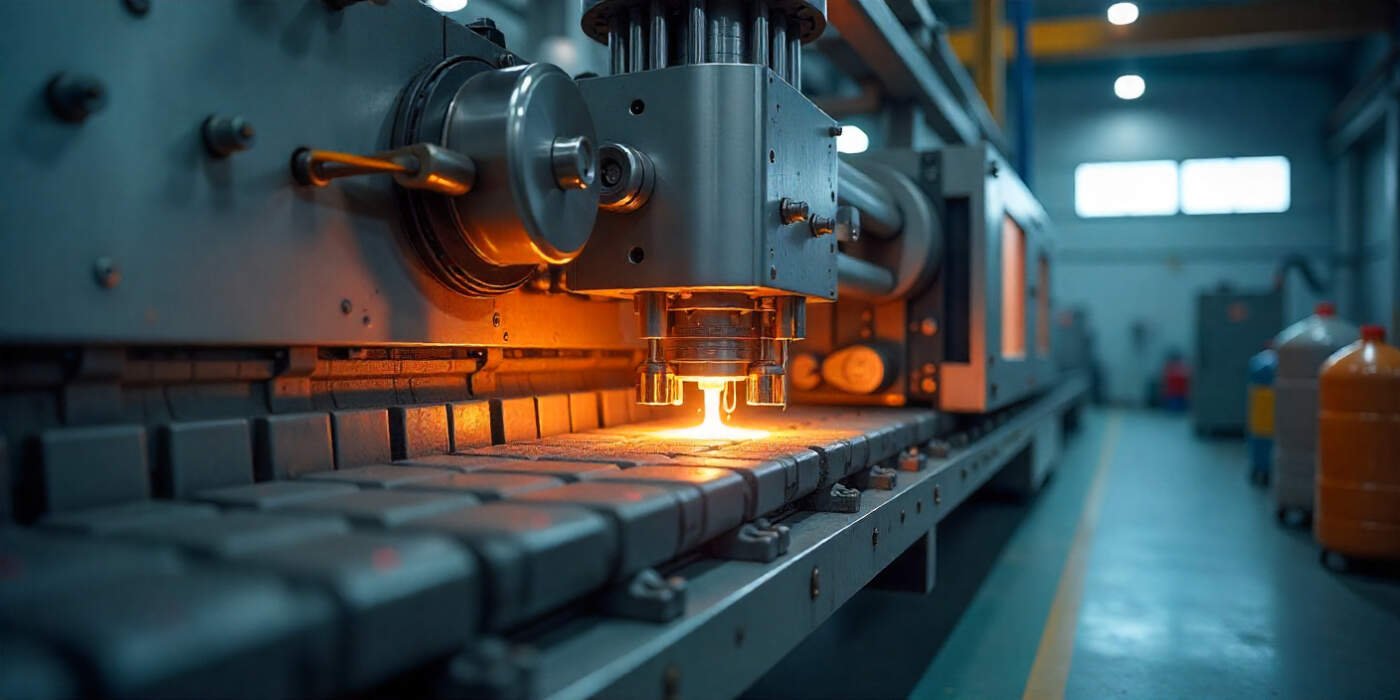

A production manager once said, “Our biggest challenge is not running machines, it is keeping them running fast enough without waste.” Many plastic factories across the GCC share this same thought. Deadlines move quickly, demand rises in cycles, and customers expect consistent results with minimal delays. In this fast-moving environment, Extrusion Blow Molding Machines have become the backbone of stable and high-volume manufacturing.
These machines do far more than shape plastic. They support faster cycles, reduce waiting time between stages, and help teams reach output levels that were nearly impossible a decade ago. When a plant aims to supply bottles, containers, drums, or industrial packaging at scale, production speed becomes the defining factor. This is where modern Blow Molding Machines step forward.
Below is a complete breakdown of how these machines strengthen output, improve stability, and help plastic industries meet growing demand without increasing operational pressure.
Why Faster Output Matters in Today’s Plastic Manufacturing
Speed is not only about quantity. It affects stability, pricing, and delivery confidence. A plant that runs slow loses energy, material precision, and labor hours. As customer deadlines shorten, industries look for systems that support safe speed without disrupting quality.
Modern extrusion-based systems solve this because they create a smoother workflow, remove unnecessary pauses between stages, and allow continuous material flow. This uninterrupted motion becomes the core engine behind higher output.
What Gives Extrusion Blow Molding Machines a Naturally Faster Production Cycle
Extrusion blow technology flows plastic in a continuous stream before shaping it inside a mold. This steady flow means the machine never needs to restart or reload between cycles.
Key reasons production cycles move faster
-
Melt movement stays steady inside the barrel, allowing rapid parison formation under stable temperature
-
Mold closing and inflation happen in a predictable rhythm
-
Cooling time becomes shorter because the parison enters the mold at a consistent temperature
Even a small gain in cycle time becomes noticeable when producing thousands of bottles daily.
How Continuous Melt Flow Improves Overall Output
Factories that shift from older multi-step systems to extrusion blow methods often notice one major difference: fewer interruptions. Continuous melt flow maintains constant pressure inside the barrel, which helps the parison drop smoothly and evenly.
This consistency affects output in several ways:
-
Less downtime caused by unstable melt temperature
-
Better wall distribution during the inflation stage
-
Reduced chances of defects, which removes rework time
When a machine avoids defects, daily throughput increases automatically.
How Extrusion Blow Molding Machines Improve Cooling Efficiency
Cooling time often controls the total cycle duration. If the mold retains too much heat, the entire line slows down. Modern Blow Molding Machines use advanced cooling channels that move water faster around the mold surface.
This leads to:
-
Quicker part release
-
Shorter cycle intervals
-
Less heat buildup inside the workstation
Stable cooling is one of the strongest contributors to consistent, high-volume output.
Why Better Parison Control Leads to Stronger Output Stability
Parison control has a direct link to speed. When the parison forms with the right thickness profile, inflation becomes predictable. Factories do not waste time adjusting mold pressure, fixing short shots, or repeating cycles after failure.
What improved parison control helps prevent
-
Weak corners
-
Part collapse
-
Twisting or uneven wall surfaces
Better control equals fewer rejects, and fewer rejects mean higher daily output.
How Automation Inside Blow Molding Machines Raises Output
Automation has quietly changed the rhythm of plastic manufacturing. Instead of relying on manual adjustments, machines automatically monitor and adjust melt pressure, cooling flow, die temperature, and inflation timing.
Automation contributes to higher output through
-
Instant detection of parameter changes
-
Stable cycle repetition without operator delays
-
Faster transitions between mold sets
Factories that adopted automated extrusion blow systems often reported smoother workflow and more predictable delivery schedules.
How Energy Stability Supports Faster Manufacturing
Many plastic plants in GCC countries focus on cutting energy waste. Modern machines consume less energy per cycle, which allows plants to run longer production shifts without overloading the system.
Lower energy spikes mean:
-
Less downtime caused by overheating
-
More active hours per day
-
A stable supply of consistent output
Energy stability also reduces long-term stress on machine components.
Which Plastic Industries Experience the Most Output Growth Using Extrusion Blow Molding Machines
Several sectors have seen noticeable improvement in production speed after switching to more advanced systems.
Industries gaining the most advantage
-
Food and beverage packaging where bottle uniformity and speed are essential
-
Automotive fluid containers that require stable wall thickness
-
Household cleaning bottles produced in high daily volumes
-
Pharmaceutical packaging where precision matters as much as speed
These industries rely on continuous supply, which extrusion blow technology naturally supports.
Can Faster Output Harm Product Quality
Many plant managers worry that increasing speed will compromise stability. Modern machines solve this problem by balancing heat, pressure, and mold flow automatically. Instead of pushing speed manually, systems adjust themselves to maintain quality even at higher output.
This allows factories to scale without losing control over weight consistency, surface finish, or durability.
Comparison Table: Traditional Systems vs Extrusion Blow Molding Machines
| Feature | Traditional Molding Approach | Extrusion Blow Molding Machines |
|---|---|---|
| Melt Flow | Often interrupted flow which slows cycle efficiency | Constant melt flow that supports steady and predictable cycles |
| Cooling Performance | Slower cooling because of uneven heat distribution | Faster mold cooling due to optimized channels and steady heat profile |
| Output Stability | Requires frequent manual adjustments that reduce speed | Stronger stability because of automated monitoring and controlled parison flow |
| Defect Rate | Higher reject rates lead to slower output | Lower reject rates increase finished product volume |
| Cycle Speed | Many pauses between stages | Continuous production with minimal pauses |
Each point shows how speed and stability improve when extrusion blow technology replaces older systems.
Conclusion: Is It Time to Increase Output with Modern Blow Molding Machines
Industries aiming to achieve higher output and predictable delivery schedules continue to move toward extrusion blow technology because it reduces delays, improves cycle regularity, and lowers defect rates. These gains help factories manage large orders without overextending labor or machine capacity.
Modern Extrusion Blow Molding Machines give plastic manufacturers the chance to work faster without losing consistency. When output rises smoothly and reliably, factories gain better control over pricing, delivery timing, and long-term production planning. For many plastic plants, reaching higher output is not only about speed. It is about stable systems that work with precision day after day.
Visit the link below: sukoonfarhouse.com


Leave a Comment