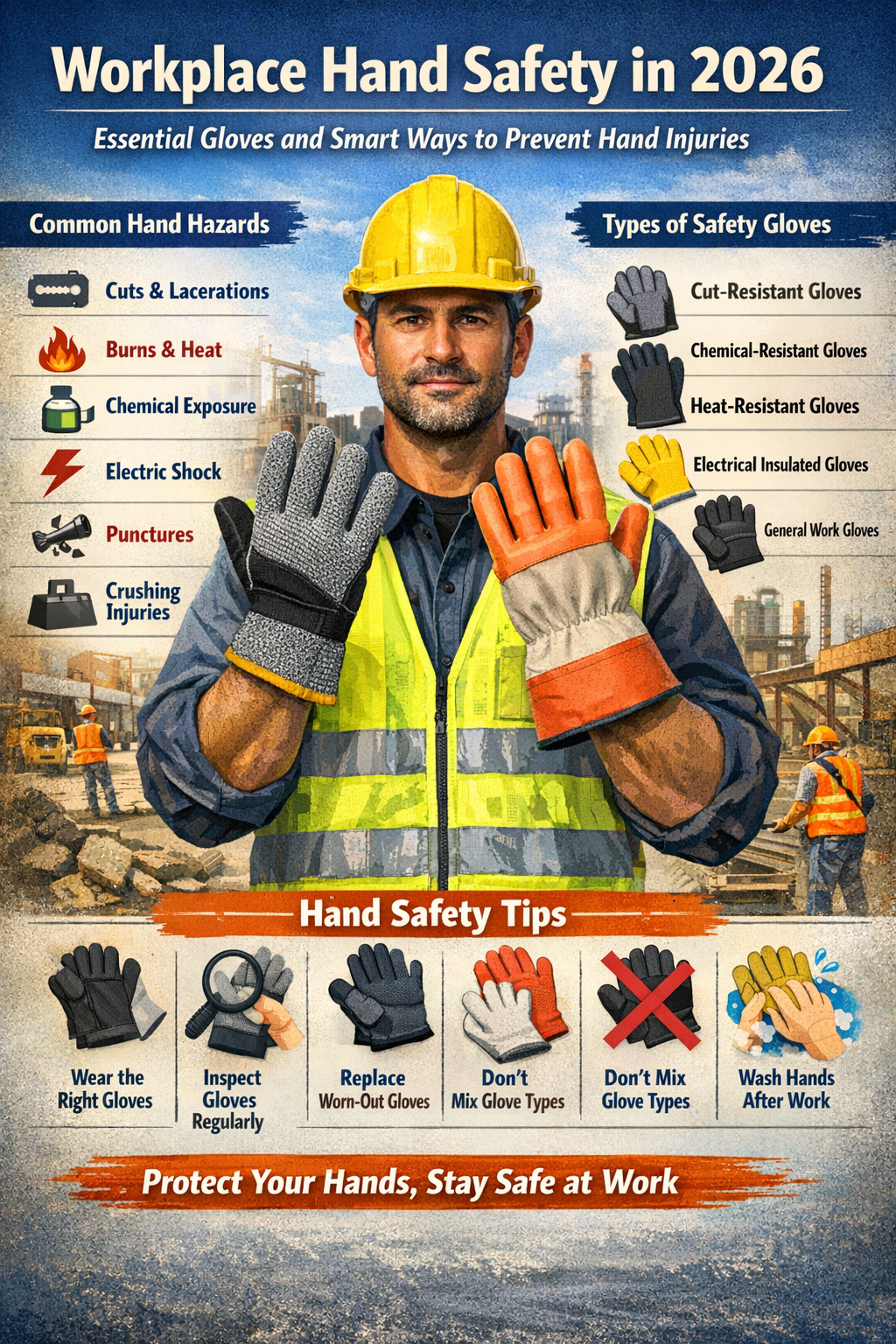

Hands are one of the most important tools workers use every day. In industries like construction, manufacturing, automotive repair, electrical maintenance, and warehouses, almost every task depends on hand movement and grip. Because of this constant use, hands are highly exposed to injuries.
Many workplace accidents occur when workers handle tools, machinery, chemicals, or hot materials without proper protection. Cuts, burns, skin irritation, and electrical shocks are common problems that can occur when safety gloves are not used correctly.
The good news is that most hand injuries can be prevented with the right protective gloves and simple workplace safety habits. This guide explains workplace hand protection, common hazards, types of safety gloves, and practical ways to keep hands safe while working.
What Is Hand Protection?
Hand protection refers to safety equipment designed to protect workers’ hands from injuries, harmful substances, and dangerous work conditions.
In most workplaces, this protection comes in the form of specialized safety gloves made from different materials depending on the risk involved.
Simple definition:
Hand protection is personal protective equipment (PPE) used to protect hands while performing work tasks.
This type of protection is commonly required in industries such as:
- Construction sites
- Manufacturing plants
- Electrical maintenance work
- Automotive repair workshops
- Warehousing and logistics
- Chemical processing industries
- Welding operations
- Mechanical workshops
Using the correct hand protection helps reduce workplace accidents and ensures workers can safely perform their tasks.
Why Hand Protection Is Important in the Workplace
Workers rely on their hands for nearly every job task. Even a small injury can affect a worker’s ability to perform their job and may slow down overall operations.
Without proper hand protection, workers are exposed to several risks.
Common workplace hand injuries include:
- Cuts and deep lacerations
- Burns from hot surfaces or sparks
- Skin irritation caused by chemicals
- Electric shock injuries
- Puncture wounds from sharp objects
- Crushing injuries from heavy materials
- Abrasions from rough surfaces
Using the correct protective gloves greatly reduces these risks and helps maintain a safer working environment.
For businesses, investing in proper hand protection also reduces workplace accidents, medical costs, and production delays.
Workplace Hazards That Require Hand Protection
Different work environments expose workers to different hazards. Understanding these risks helps in selecting the right safety gloves.
Mechanical Hazards
Mechanical hazards usually involve sharp objects, heavy materials, or machinery.
Examples include:
- Cutting tools
- Metal sheets
- Machine components
- Glass panels
- Rough construction materials
Workers handling these materials should wear gloves designed to prevent cuts and abrasions.
Chemical Hazards
Chemical exposure can damage skin and lead to long-term health problems.
Common sources of chemical hazards include:
- Industrial chemicals
- Cleaning solutions
- Oils and lubricants
- Laboratory chemicals
Chemical-resistant gloves create a protective barrier between the worker’s skin and hazardous substances.
Heat Hazards
Workers exposed to high temperatures require gloves that provide thermal protection.
Examples include:
- Welding tasks
- Furnace operations
- Metal fabrication industries
- Commercial kitchens
Heat-resistant gloves help prevent burns caused by hot surfaces, molten materials, and sparks.
Electrical Hazards
Electrical work carries serious risks if proper safety equipment is not used.
Examples include:
- Live electrical wires
- Electrical panels
- High-voltage systems
- Power distribution equipment
Electricians and technicians use insulated rubber gloves to protect themselves from electrical shock.
Types of Protective Gloves Used in Industrial Work
Different work activities require different types of gloves. Choosing the correct glove ensures maximum protection.
General-Purpose Work Gloves
These gloves provide basic protection for light tasks.
Common types include:
- Cotton gloves
- Rubber gloves
- Latex gloves
- Nitrile gloves
- Leather gloves
They help protect against dirt, minor abrasions, and light handling tasks.
Cut-Resistant Gloves
Cut-resistant gloves are designed to protect hands from sharp edges and cutting tools.
These gloves are widely used in:
- Metal fabrication industries
- Glass handling operations
- Construction sites
- Machine maintenance work
They are often made from strong materials like Kevlar or reinforced fibers that resist cuts.
Chemical-Resistant Gloves
Chemical protection gloves are used when handling hazardous liquids and chemicals.
Industries that commonly require them include:
- Chemical plants
- Laboratories
- Cleaning services
- Automotive maintenance workshops
Materials such as nitrile, neoprene, and butyl rubber are commonly used because they resist chemicals, oils, and solvents.
Heat-Resistant Gloves
These gloves protect workers from high temperatures and hot surfaces.
They are commonly used in:
- Welding operations
- Foundry work
- Metal manufacturing
- Industrial kitchens
Leather and specialized thermal materials help prevent burns from heat exposure.
Electrical Insulated Gloves
Electrical safety gloves are essential for workers dealing with electrical systems.
These gloves are typically used by:
- Electricians
- Electrical engineers
- Maintenance technicians
- Power plant workers
Insulated rubber materials help prevent electric shocks while working with live electrical equipment.
How to Choose the Right Safety Gloves
Selecting the right hand protection equipment is essential for maintaining workplace safety.
1. Identify Workplace Hazards
Start by understanding the risks involved in the task.
Typical hazards include:
- Sharp objects
- Chemicals
- Heat exposure
- Electrical systems
- Heavy materials
The glove type should match the specific risk.
- Select the Right Material
Each glove material provides protection against different hazards.
Examples:
- Rubber → chemical protection
- Leather → heavy-duty tasks
- Nitrile → oils and solvents
- Kevlar → cut resistance
- Insulated rubber → electrical safety
Choosing the correct material ensures effective protection.
- Ensure Proper Fit
Proper glove fit is extremely important.
Poorly fitting gloves can create safety risks:
- Loose gloves reduce grip
- Tight gloves limit movement
- Wrong size causes discomfort
Comfortable gloves improve both safety and productivity.
- Check Durability and Quality
Industrial environments require durable gloves designed for tough work conditions.
High-quality gloves last longer and provide better protection.
Practical Tips to Prevent Hand Injuries at Work
Simple safety habits can greatly reduce hand injuries.
Follow these basic guidelines:
- Always wear gloves suitable for the task
- Avoid using damaged gloves
- Replace worn-out gloves immediately
- Inspect gloves before starting work
- Do not mix glove types for different hazards
- Store gloves in clean and dry places
- Wash hands after removing gloves
Consistently following these practices helps maintain strong hand protection.
How SpareVillage Helps Businesses Source Hand Protection Equipment
Finding reliable safety equipment suppliers can be difficult for many businesses. Companies often struggle to locate trusted manufacturers and compare product quality.
SpareVillage is an industrial sourcing platform that connects businesses with verified suppliers across India. The platform helps companies easily access a wide range of safety equipment, including protective gloves designed for different industries.
Businesses choose SpareVillage because it provides:
- Verified industrial suppliers
- A wide selection of workplace safety products
- Reliable glove options for various industries
- Simplified sourcing for businesses and workshops
- Competitive pricing for bulk purchases
Whether companies need gloves for construction work, factories, electrical maintenance, or warehouses, SpareVillage makes it easier to find the right safety equipment from trusted suppliers.
Example: Hand Safety in Construction Work
Construction workers regularly face risks that can damage their hands.
Common tasks include:
- Cutting building materials
- Handling bricks and steel rods
- Operating power tools
- Lifting rough materials
Without proper gloves, workers may experience:
- Cuts and scratches
- Blisters
- Skin irritation
- Surface abrasions
Using cut-resistant or heavy-duty gloves significantly reduces these risks and improves job safety.
Signs Your Current Gloves Are Not Providing Enough Protection
If workers still experience injuries while wearing gloves, it may indicate that the gloves are not suitable for the job.
Warning signs include:
- Frequent small cuts or scratches
- Chemical irritation on the skin
- Poor grip while using tools
- Heat burns during work
- Gloves wearing out too quickly
These signs suggest the need for better hand protection equipment.
Benefits of Proper Hand Protection
Using the right protective gloves offers several advantages for both workers and businesses.
Reduced Workplace Injuries
Protective gloves help prevent cuts, burns, and chemical exposure.
Increased Productivity
Workers perform tasks more confidently when they feel safe.
Safety Compliance
Proper hand protection helps businesses follow workplace safety regulations.
Lower Operational Costs
Fewer injuries mean lower medical expenses and reduced downtime.
Conclusion
Hands are essential for almost every job, which makes protecting them extremely important. Using the right safety gloves helps workers prevent injuries, stay productive, and maintain workplace safety.
By understanding workplace hazards and choosing the correct type of protective gloves, businesses can significantly reduce accidents and create safer working environments.
For companies looking for dependable industrial safety products, SpareVillage provides a convenient platform to connect with trusted suppliers and source high-quality hand protection equipment.
A safer workplace always begins with the right protective gear — and protecting workers’ hands is one of the most important steps.


Leave a Comment