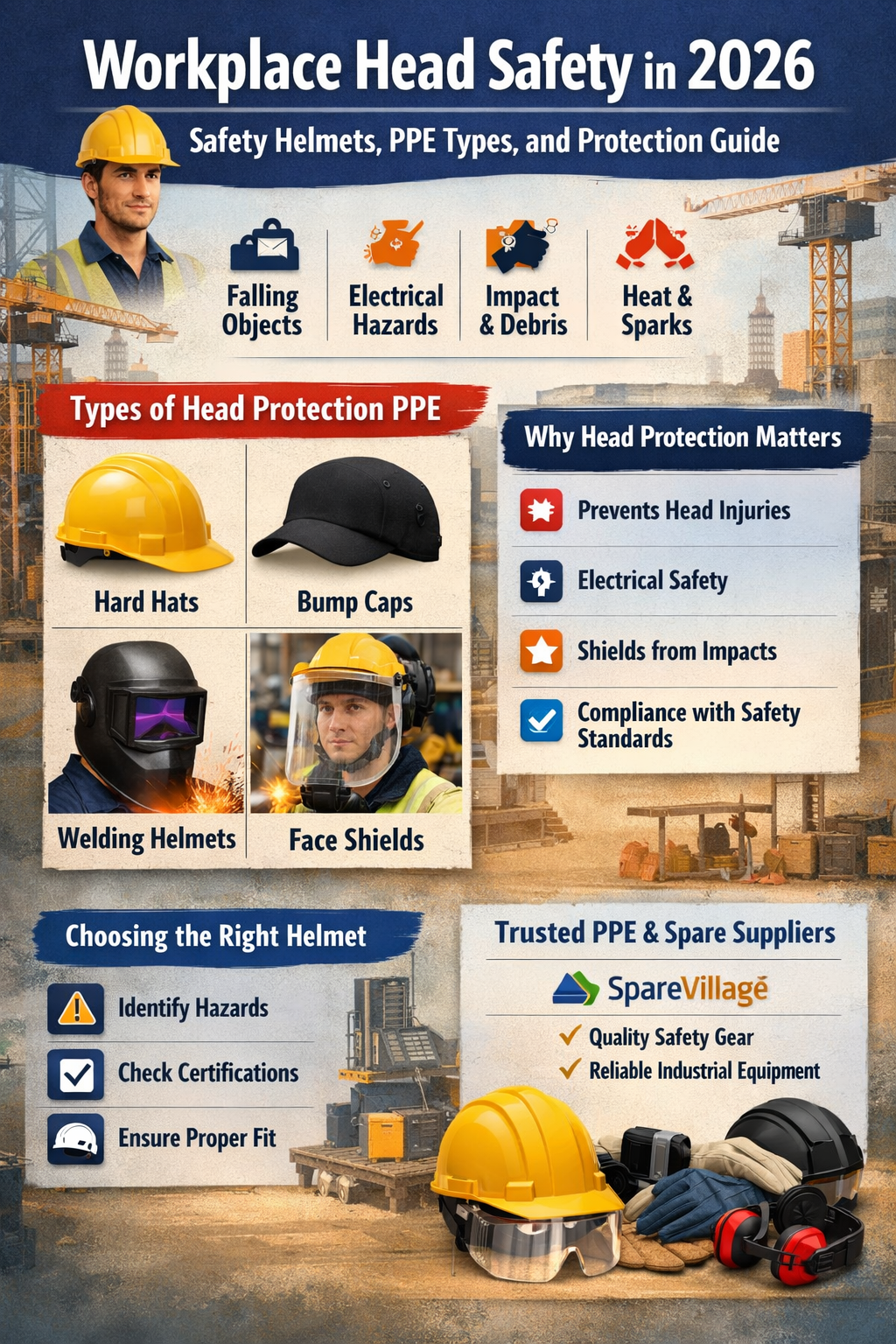

Head injuries remain one of the most dangerous risks in industrial workplaces. Workers in environments such as construction sites, factories, warehouses, engineering plants, and maintenance workshops are constantly exposed to hazards like falling tools, sharp objects, heavy machinery movement, and electrical dangers.
Because of these risks, head protection PPE (Personal Protective Equipment) has become a critical part of workplace safety policies worldwide. Modern safety helmets and protective gear are specifically designed to reduce the chances of serious head injuries and improve overall workplace protection.
In this 2026 workplace safety guide, we will explain:
- What head protection PPE is
- Why safety helmets are essential in industrial environments
- Different types of head protection equipment
- The difference between head protection and face protection
- Industries that require head protection
- How to choose the right safety helmet
- Important safety practices for proper helmet use
What Is Head Protection PPE?
Head protection PPE refers to specialized safety equipment designed to protect workers from injuries to the head caused by workplace hazards.
Industrial environments often expose workers to risks such as:
- Falling construction materials or tools
- Flying debris or metal fragments
- Collisions with machinery or structures
- Electrical hazards and arc flashes
- Chemical exposure
- Heat, sparks, or fire
The most widely used head protection equipment is the safety helmet, commonly known as a hard hat. These helmets are required in industries where workers face potential impact or environmental hazards.
Professionals working in construction, engineering, manufacturing, electrical maintenance, and heavy industries usually wear safety helmets as part of mandatory safety regulations.
Why Head Protection Is Important in Industrial Workplaces
Head injuries can lead to severe medical conditions, including long-term disability or even fatal accidents. Many workplace injuries could be avoided simply by wearing the correct protective equipment.
Safety helmets help reduce the risk of:
- Skull fractures
- Traumatic brain injuries
- Cuts and deep wounds
- Electrical shock damage
- Burns caused by sparks or heat
Advantages of Using Head Protection PPE
Proper head protection offers several benefits:
- Protection from falling objects
- Reduced impact during accidents
- Electrical insulation in hazardous areas
- Compliance with workplace safety regulations
- Lower medical and compensation costs
Companies that enforce strict PPE policies protect their workforce and maintain better productivity by preventing workplace accidents.
What Is a Safety Helmet?
A safety helmet is protective headgear designed to absorb shock and minimize the force of impact during accidents.
Modern industrial helmets consist of two main protective components.
1. Outer Shell
The external shell is typically made from strong materials such as high-density polyethylene (HDPE) or advanced thermoplastic polymers.
The shell protects the worker from:
- Falling debris
- Sharp object penetration
- Direct impacts
2. Suspension System
Inside the helmet is an adjustable suspension harness that creates space between the helmet shell and the worker’s head.
This system helps by:
- Absorbing shock energy
- Distributing impact force evenly
- Improving comfort and stability
The combination of these components significantly reduces the force transmitted to the skull during accidents.
Types of Head Protection Equipment
Different workplaces require different types of head protection depending on the hazards involved.
Below are the most common types used in industrial environments.
1. Hard Hats
Hard hats are the most widely used industrial helmets. They provide protection against:
- Falling objects
- Impact injuries
- Electrical hazards
They are commonly used in:
- Construction sites
- Manufacturing plants
- Infrastructure projects
- Warehouses and logistics centers
- Bump Caps
Bump caps are lightweight protective caps designed for low-risk environments.
They protect workers from:
- Minor head bumps
- Scratches or scrapes
- Contact with low ceilings or structures
Bump caps are typically used in:
- Warehouses
- Maintenance areas
- Automotive repair workshops
However, they are not suitable for high-impact industrial environments.
- Welding Helmets
Welding helmets provide both head and face protection during welding operations.
They protect workers from:
- Intense welding light and UV radiation
- Hot sparks and molten metal
- Heat and glare
Many modern welding helmets feature auto-darkening lenses that automatically adjust to protect the eyes during welding arcs.
- Face Shields
Face shields are transparent protective visors that are usually worn along with safety helmets.
They help protect against:
- Flying particles
- Grinding sparks
- Chemical splashes
These are widely used in:
- Grinding operations
- Metal cutting
- Chemical processing environments
- Firefighter Helmets
Firefighter helmets are designed for extreme working conditions and emergency response operations.
They provide protection against:
- High temperatures
- Flames and smoke
- Structural debris during rescue operations
Head Protection vs Head and Face Protection
Understanding the difference between these two categories is important for selecting the correct PPE.
Head Protection
This equipment focuses on protecting the top and sides of the head.
Examples include:
- Hard hats
- Bump caps
Head and Face Protection
These PPE items protect both the head and facial area.
Examples include:
- Welding helmets
- Face shields
- Helmet-mounted visors
Workers performing welding, cutting, grinding, or chemical handling tasks should use combined protection systems.
Industries That Require Head Protection
Many industries require workers to wear safety helmets due to potential hazards.
Common industries include:
- Construction
- Manufacturing
- Mining
- Oil and gas
- Warehousing and logistics
- Metal fabrication
- Electrical maintenance
- Chemical processing
In most of these sectors, helmet use is mandatory according to workplace safety regulations.
How to Choose the Right Safety Helmet
Selecting the correct helmet depends on the working conditions and risk level of the workplace.
1. Identify Workplace Hazards
Start by analyzing the risks workers may encounter, such as:
- Falling tools or materials
- Electrical exposure
- Sparks and heat
- Chemical splashes
2. Choose the Correct Helmet Type
Different tasks require different helmets.
Examples include:
- Construction work → Hard hats
- Welding work → Welding helmets
- Electrical jobs → Insulated helmets
- Chemical work → Face shields
3. Check Safety Certifications
Always select helmets that meet recognized safety standards, such as:
- ISI certification (India)
- ANSI standards
- EN European safety standards
Certified helmets ensure tested safety performance.
4. Ensure Proper Fit
A good safety helmet should:
- Fit securely on the head
- Include adjustable straps
- Remain stable during movement
- Provide comfort during long working hours
An improperly fitted helmet can reduce protection effectiveness.
Safety Tips for Using Head Protection PPE
Even high-quality PPE cannot protect workers if it is used incorrectly.
Inspect Helmets Regularly
Check for:
- Cracks or dents
- Loose suspension systems
- Signs of wear or damage
Replace damaged helmets immediately.
Wear Helmets Properly
Workers should:
- Avoid drilling or modifying helmets
- Adjust the suspension correctly
- Always fasten straps properly
Replace Helmets When Needed
Helmets exposed to sunlight, chemicals, or high temperatures can weaken over time. Regular replacement ensures continued protection.
Store PPE Correctly
Safety helmets should be stored:
- In dry and cool areas
- Away from chemicals
- Away from direct sunlight
Proper storage extends helmet lifespan.
Finding Reliable PPE and Industrial Spare Suppliers
Ensuring worker safety requires access to high-quality safety equipment and spare components. Companies should always purchase PPE from reliable suppliers that provide certified products.
Platforms such as SpareVillage help businesses and MSMEs connect with trusted suppliers of industrial equipment and safety products. Through SpareVillage, companies can easily source:
- Industrial safety helmets
- PPE equipment
- Engineering tools and spare parts
- Maintenance and workshop supplies
Having access to reliable spare equipment and safety gear helps industries maintain operational safety and comply with workplace regulations.
Common PPE Mistakes Workers Should Avoid
Some common mistakes can reduce the effectiveness of head protection.
Avoid the following:
- Using cracked or damaged helmets
- Wearing helmets without proper adjustment
- Choosing the wrong helmet type for the job
- Ignoring face protection when required
- Using outdated or expired PPE
Regular safety training and proper workplace supervision can help prevent these mistakes.
Conclusion
Head protection remains one of the most important elements of workplace safety in modern industries. Safety helmets, welding helmets, and face shields significantly reduce the risk of serious injuries and protect workers from hazardous conditions.
Employers must ensure workers are equipped with certified PPE, while employees should follow proper safety practices at all times.
By sourcing equipment from trusted platforms like SpareVillage, businesses can easily access reliable safety gear, industrial spare parts, and engineering tools that support safer and more efficient workplaces.


Leave a Comment